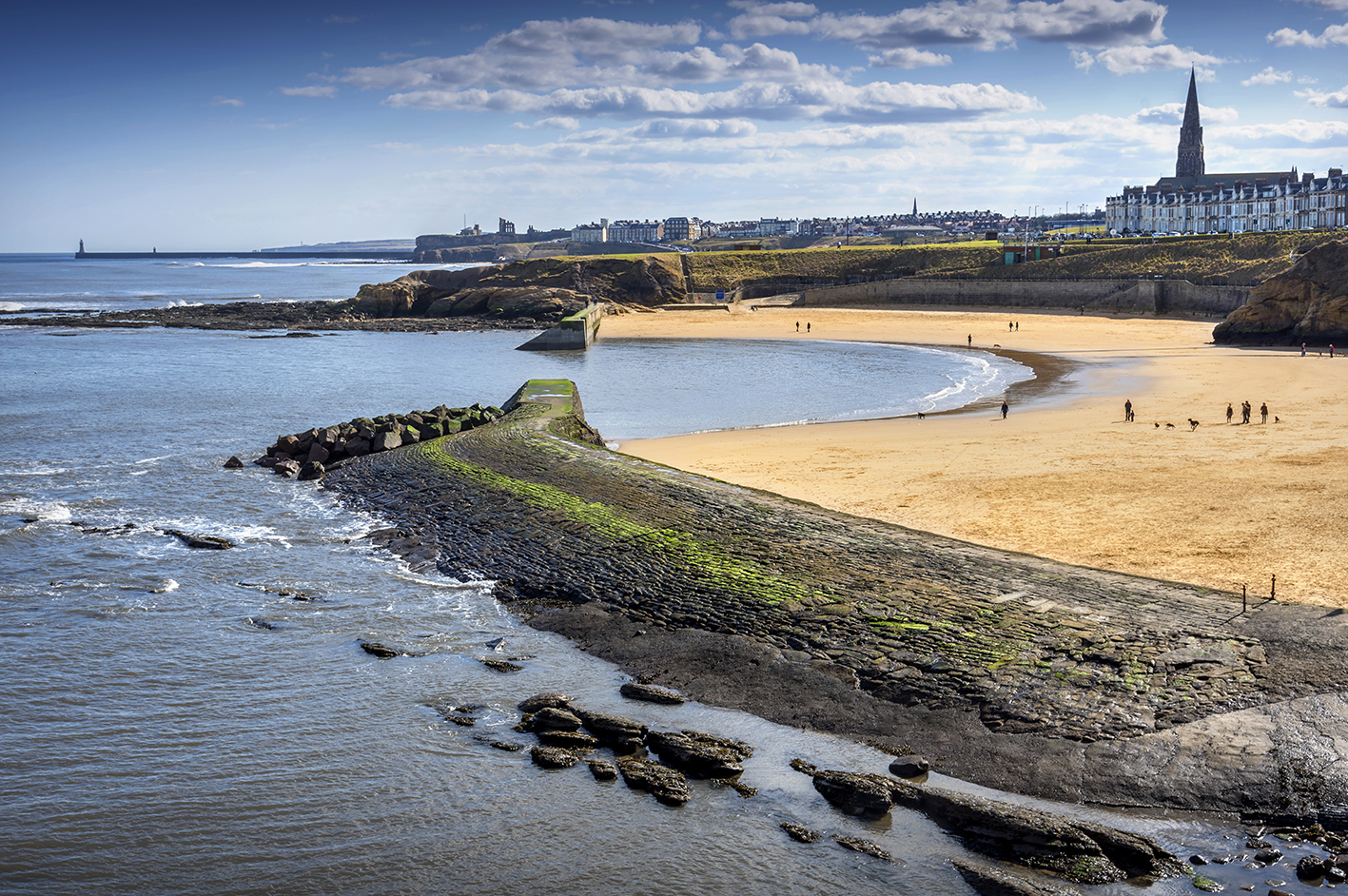
Using the power of nature to protect our coastline is at the heart of the Stronger Shores project. We are working with experts to provide clear data and evidence on the benefits of marine habitats to protect our coastline.
Listen to a fantastic podcast from Carbon Copy featuring our very own Project Delivery Manager, Karen Daglish from South Tyneside Council and Judy Power from The Tees Rivers Trust as they discuss some of the benefits that oysters, seagrass and kelp, when well protected, can provide.
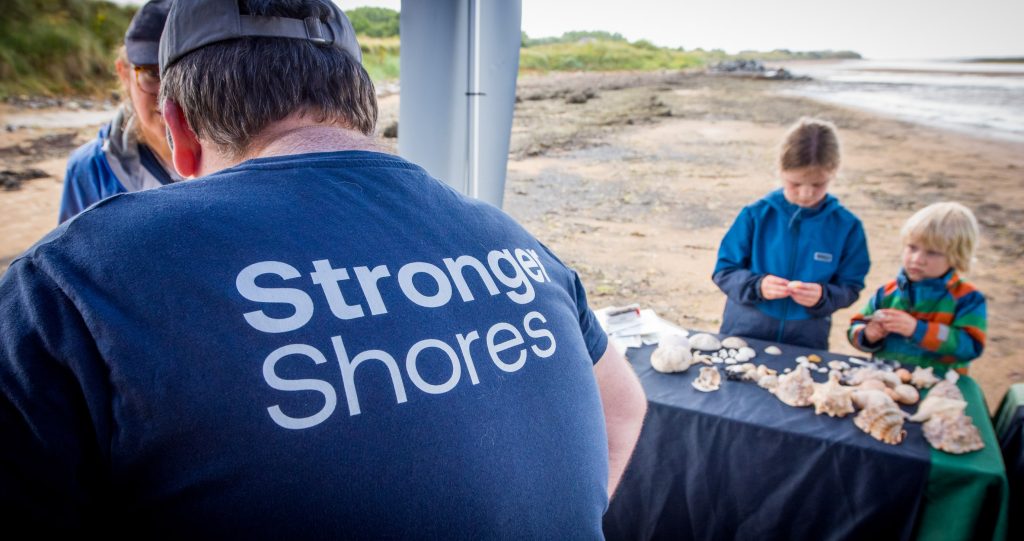
Stronger Shores and partners joined together to celebrate National Marine Week (27th July – 11th August 2024). Led by the Wildlife Trusts, colleagues from Northumberland and Durham Wildlife Trust, South Tyneside Council, Groundwork North East and Cumbria, and the Environment Agency, spent the day by the sea at Northumberland Wildlife Trust’s stunning Hauxley Reserve speaking to visitors and discussing the importance of our work to the local area.
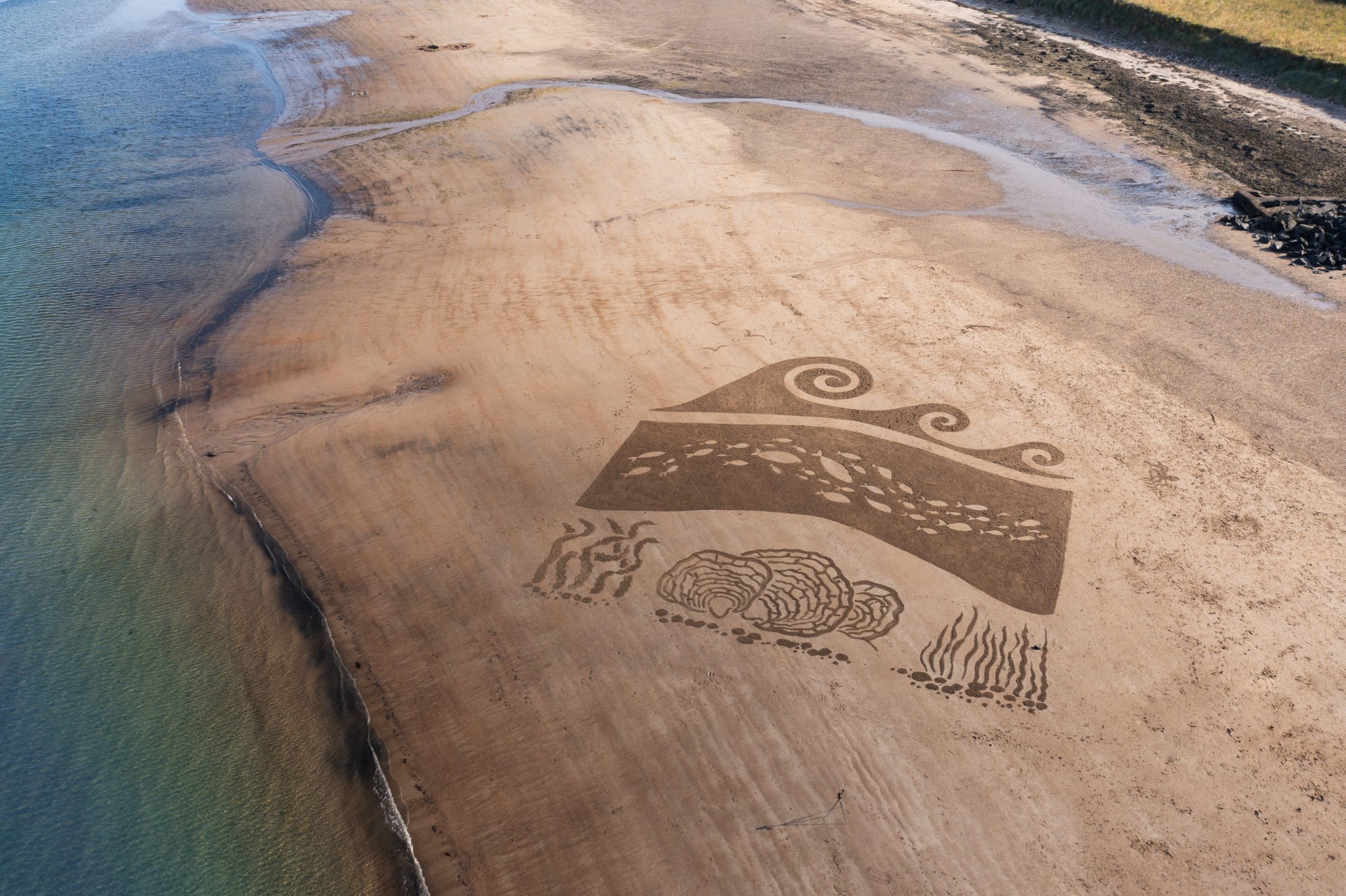
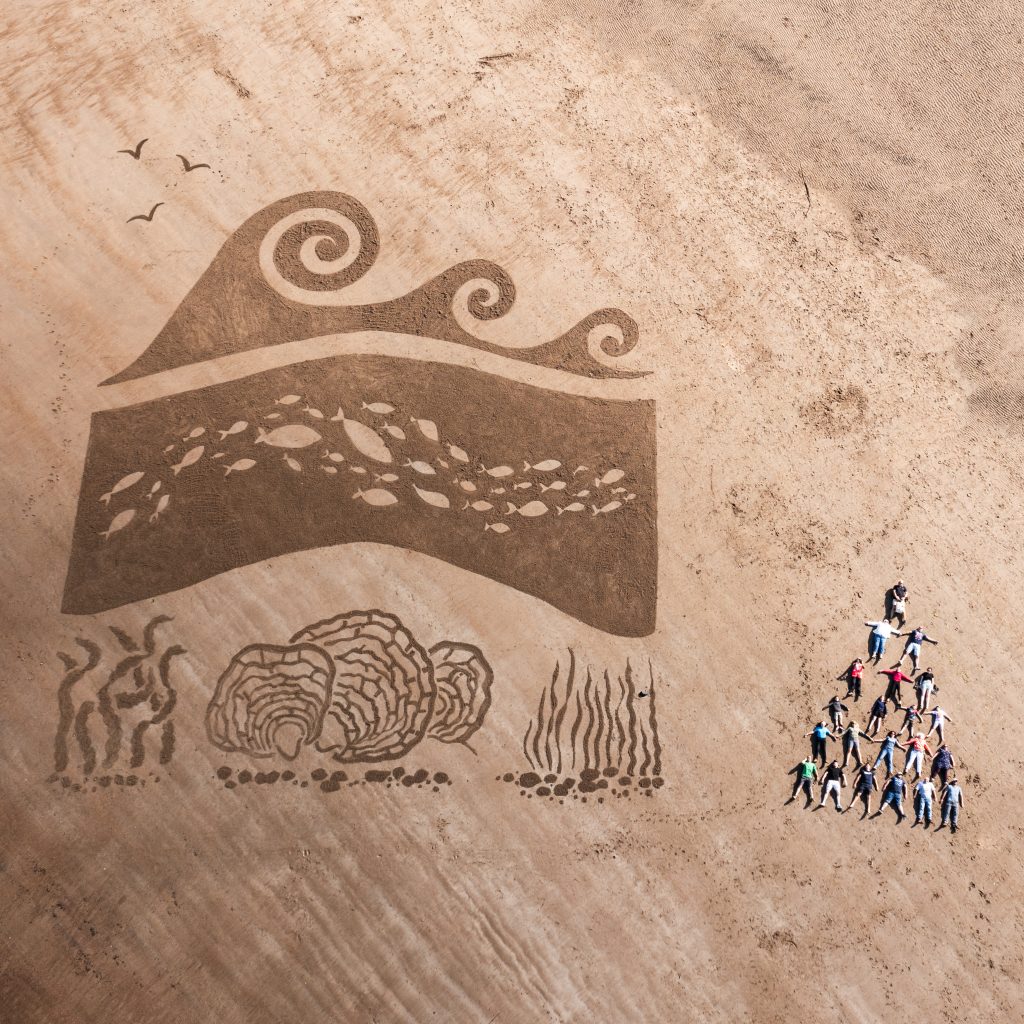
To end the weekend, the team were delighted to be joined by the incredible Soul2Sand who helped to create a beautiful (and huge) mural in the sand to represent the Stronger Shores project. Members of the community worked together to create the mural, depicting seagrass, kelp and oysters, with the final result looking fantastic.
Watch the video to see how we created this masterpiece here.
A multigenerational group joined in and made a human pyramid to symbolise strength in working together with the coastal agencies. Thank you to all the Stronger Shores partners and Soul2Sand for making this day and incredible art possible, and those who came along to visit and join in!
Stronger Shores is funded by Defra as part of the £200 million Flood and Coastal Innovation Programmes which are managed by the Environment Agency. The programmes will drive innovation in flood and coastal resilience and adaptation to a changing climate.
How do we connect people to things that they can’t see?
This has been one of the burning questions that the Stronger Shores team have been asking ourselves time after time. Seagrass meadows, kelp forests and oyster reefs are often hidden below our waves, making it difficult for people to see, understand and connect to.
We therefore made it our mission to create some fun and engaging resources to help bring the underwater work to people to allow them to learn about some of the amazing benefits that we can get from these habitats. The Stronger Shores team worked with experts from a Design Agency called Imagemakers to think outside of the box and create some exciting, educational games for everyone to enjoy.
What resources do we use?
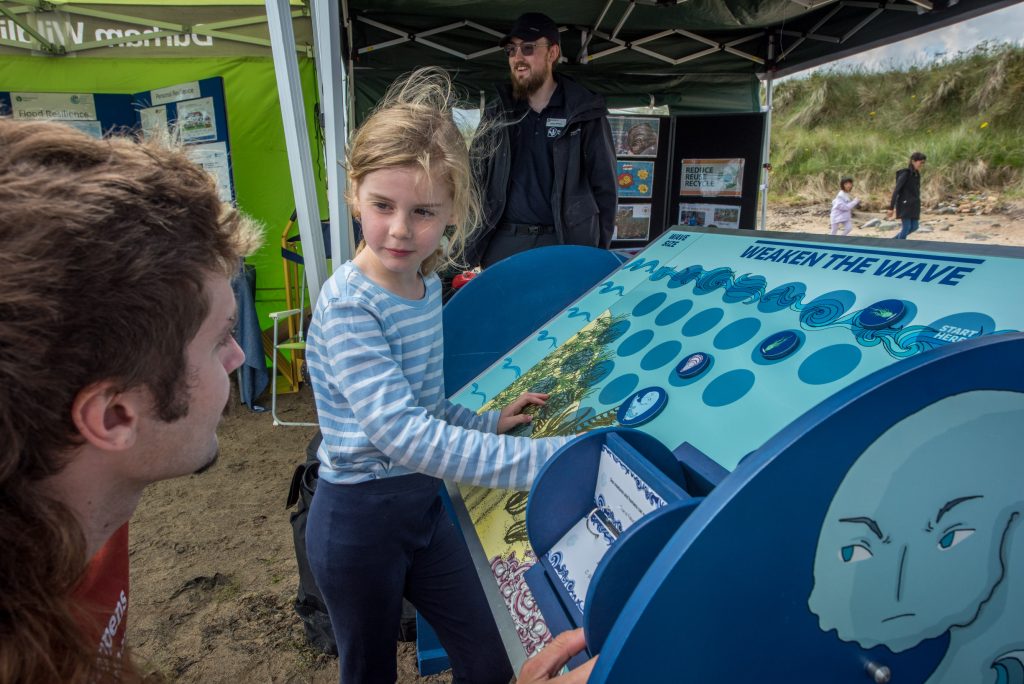
Weaken the Wave board game
The board game shows how we can use seagrass, kelp and oysters to help protect our coastline from coastal erosion and flooding. The aim of the game is to reduce the size and power of Wygla the Wave by correctly answering questions about seagrass, kelp and oysters. Each time you get a question correct, a habitat counter helps to block to wave, making it smaller and less powerful which helps to protect our coastline.
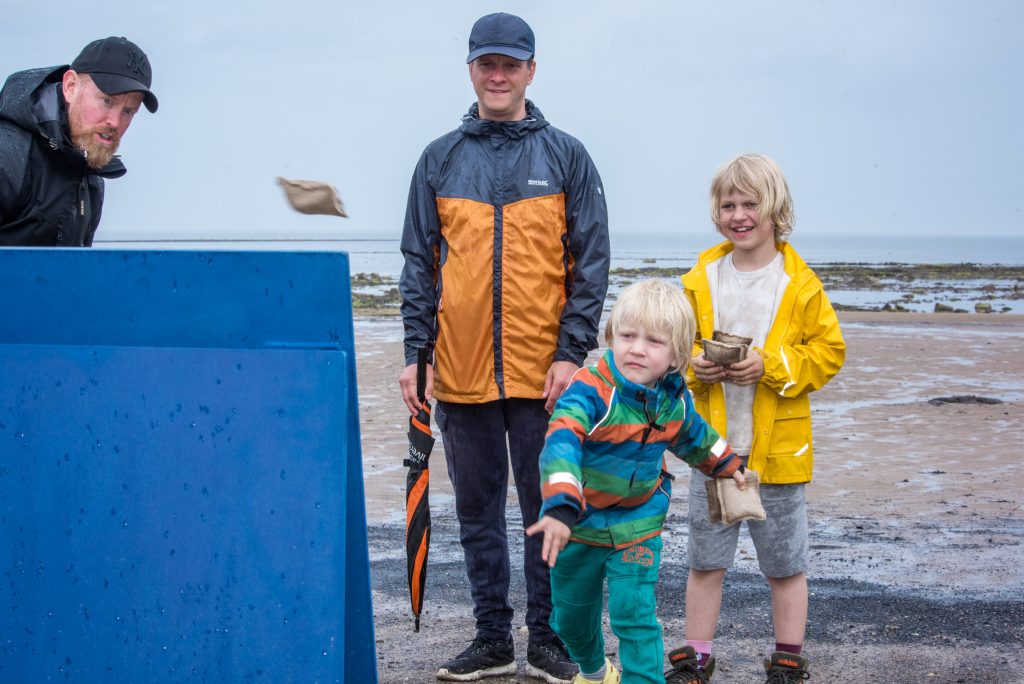
Seagrass Saver bag toss game
This game aims to educate people about the different areas in which seagrass can grow and the different factors that can effect the survival of seagrass, such as stormy conditions or birds eating the seeds. Players throw bean bags into 3 different areas on the board – all of which represent different conditions for seagrass to grow. The better the area, the more points you score.
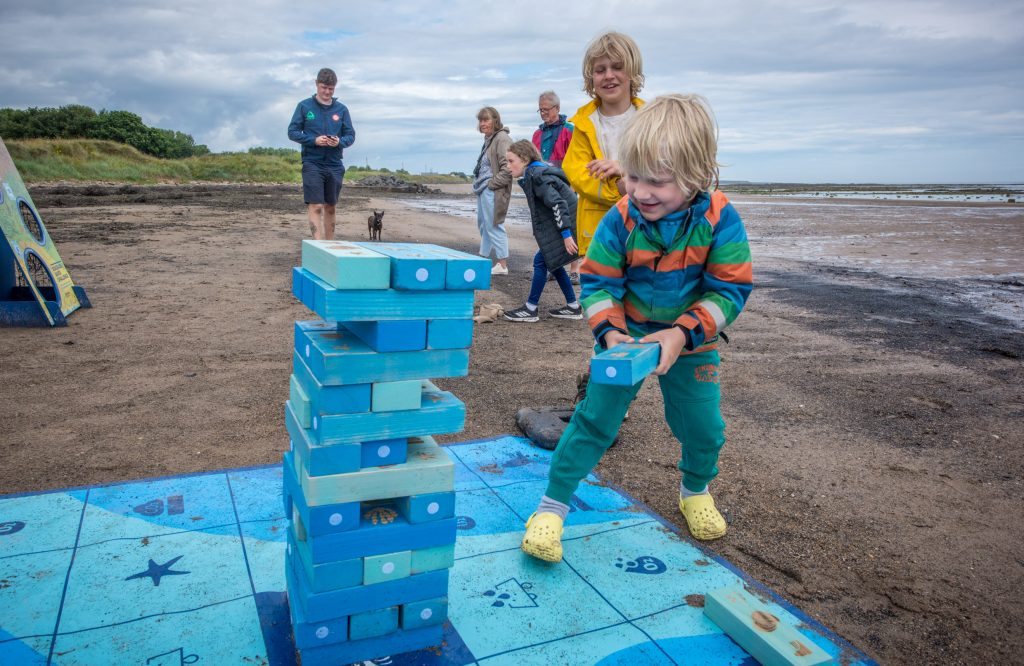
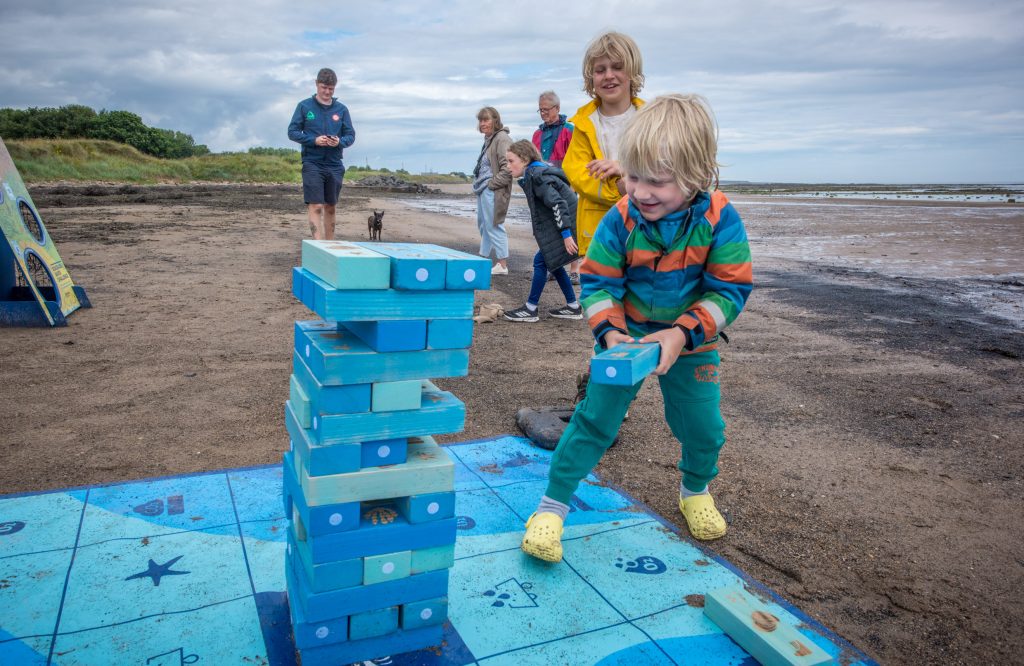
Ecosystem Services jenga
Jenga with a twist! This game aims to educate people about all of the wonderful benefits that seagrass, kelp and oysters can offer. Each block represents one of the three habitats, as well as two different benefits that they can offer. The more blocks and therefore habitats you remove makes the tower less stable, eventually resulting in the tower collapsing.
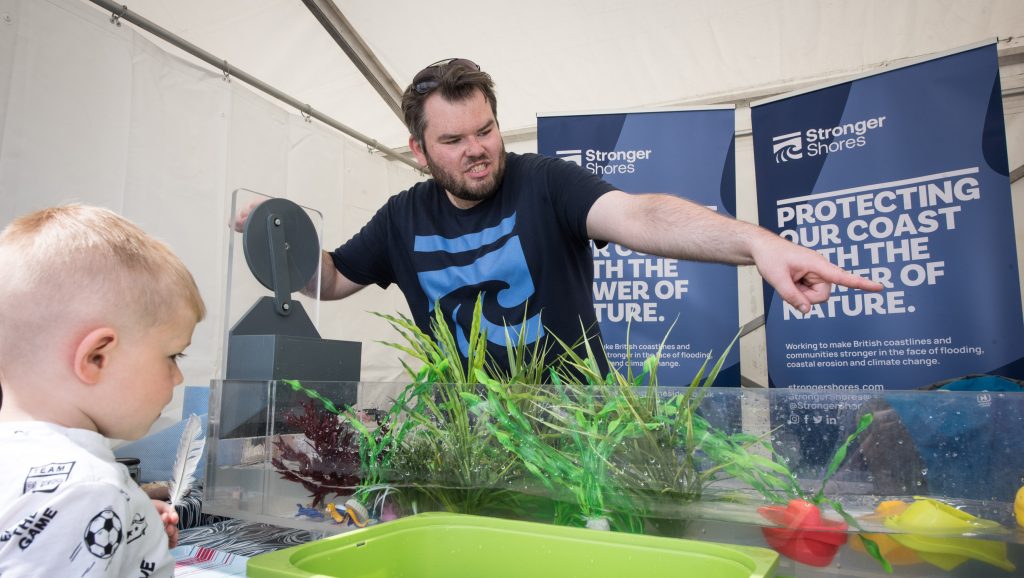
Wave Tank
Our wave tank was a big success during our summer 2023 engagement. However, our pretend seagrass, kelp and oysters needed work. We now have some brand new inserts that show the changes that these habitats can have on the movement of the waves, showing that the more seagrass, kelp and oysters we have, the bigger the impact they will have on reducing the waves, helping to protect our coastline.
Food Chain tag
We wanted to create a game that showed how the underwater world connected together. And who doesn’t love a game of tag? Food chain tag is a game that shows the different food chains that exist under the water. Each player gets a bib to wear with a different marine species on it. Players must tag the person that they ‘eat’ as part of the food chain, and must try and avoid being ‘eaten’ by the species that would eat them.
We are delighted with our new fun and exciting engagement resources and we can’t wait to use these throughout the project and beyond!
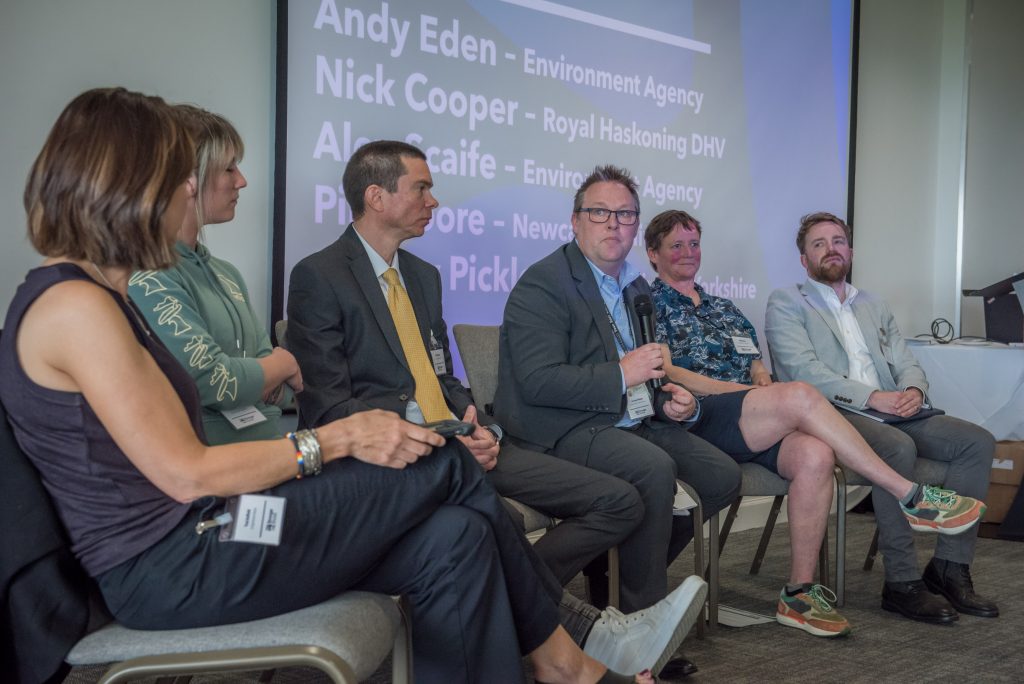
Experts from around the country gathered at the beautiful Spanish City in Whitley Bay for the inaugural Stronger Shores Conference – held on 21st May 2024.
The key theme – Beyond Concrete: Nature Based Solutions for Coastal Erosion Risk Management – aimed to help bridge the gap between experts who would like to use nature based solutions as an alternative to hard coastal defences, but are concerned about the limited evidence available to back up benefits of nature based solutions. The Conference aimed to clarify that nature based solutions were not being pushed as a replacement for hard line defences, but rather that they could work in conjunction with these defences if given the chance.
Wildlife and environment champion Trai Anfield facilitated the day, with attendees receiving presentations from all of the Stronger Shores Delivery Partners, consultants and the engagement team.
Colleagues also heard from a Panel made up of Flood and Coastal Erosion Risk Management professionals, engineers and academics who explored both challenges and opportunities of nature based solutions in the marine and coastal environment. This provided a balanced view of how realistic nature based solutions are as a solution to coastal issues increasingly facing our coastal communities, whilst also sharing benefits of using them.
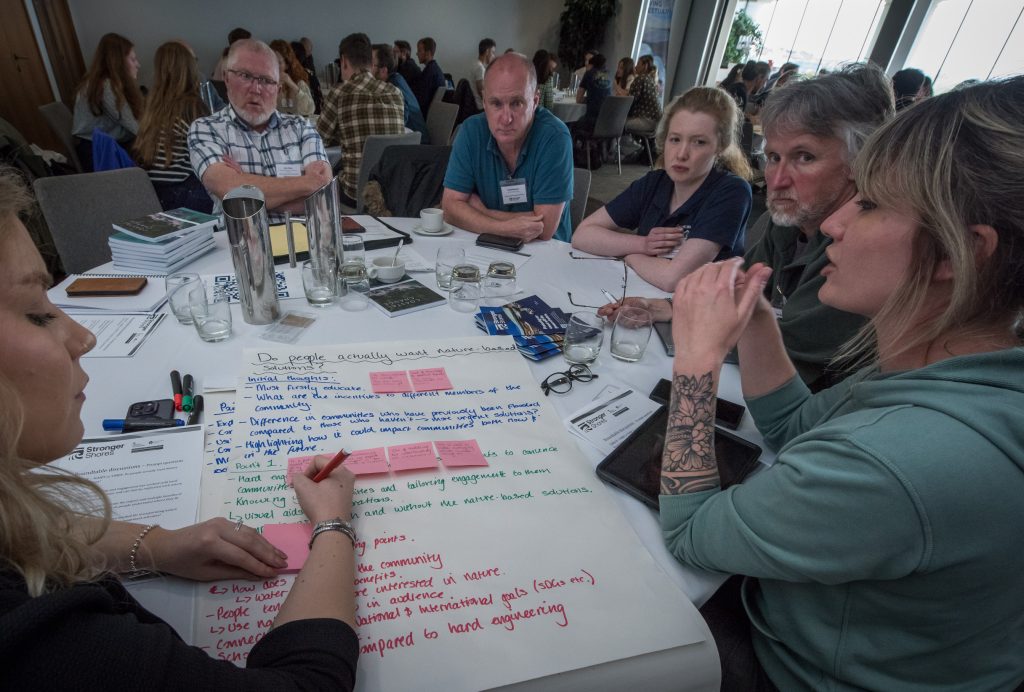
After lunch, two 30 minute roundtable discussions took place across 10 tables, providing an opportunity for attendees to discuss a variety of topics relevant to marine nature based solutions for Flood and Coastal Erosion Risk Management. Roundtable sessions were led by an organisation involved in the Stronger Shores project, combining their own knowledge and expertise with those attending discussions. This helped enable varied and insightful discussions, and the inclusion of multiple perspectives in the outputs of each roundtable.
Roundtable discussions covered regulation, evidence gaps, funding, engagement, the future of Stronger Shores and its legacy. This offered a thorough overview of what the project is achieving well, and areas where there is still scope to identify gaps, expand and improve.
Overall, the Stronger Shores Conference provided an excellent opportunity to introduce Stronger Shores to a wider audience, encourage discussions and knowledge sharing, and provide insights into the work carried out on the project so far.
We are hoping to repeat the Conference on a yearly basis until the project ends in 2027, aiming to refine and change the focus each year. Next year’s conference will reflect priorities for the project at that time, in agreement with Delivery Partners.
We would like to thank everyone who attended, presented, facilitated and contributed to this year’s conference and made it a success – together we can provide learning to help secure a future for our coasts, communities and their management.
Find the full Stronger Shores Conference Report and Presentations from the day below:
On 21 May 2024, the first Annual Stronger Shores Conference was held at Spanish City in Whitley Bay. The venue welcomed a diverse range of experts from different jobs, interests and backgrounds. This included coastal practitioners, representatives from local authorities, conservation and restoration bodies, and national regulatory bodies.
We were lucky to hear from a selection of these incredible colleagues on the day as part of the below interviews where they share their thoughts on Stronger Shores as a project. These interviews explore why Stronger Shores is important and how partnership working, monitoring data and shared knowledge from the project as a whole, can contribute positively to the future resilience and adaptation of our coasts.
Céline Gamble – Project Manager – Zoological Society of London
Andy Eden – Manager and Flood & Coastal Innovation Programmes Executive – Environment Agency
Laura Turvey – Senior Manager for Sustainability – South Tyneside Council
Helen Agosti – PhD in Natural Capital – University of Plymouth
Nick Cooper – Technical Director – Royal Haskoning DHV